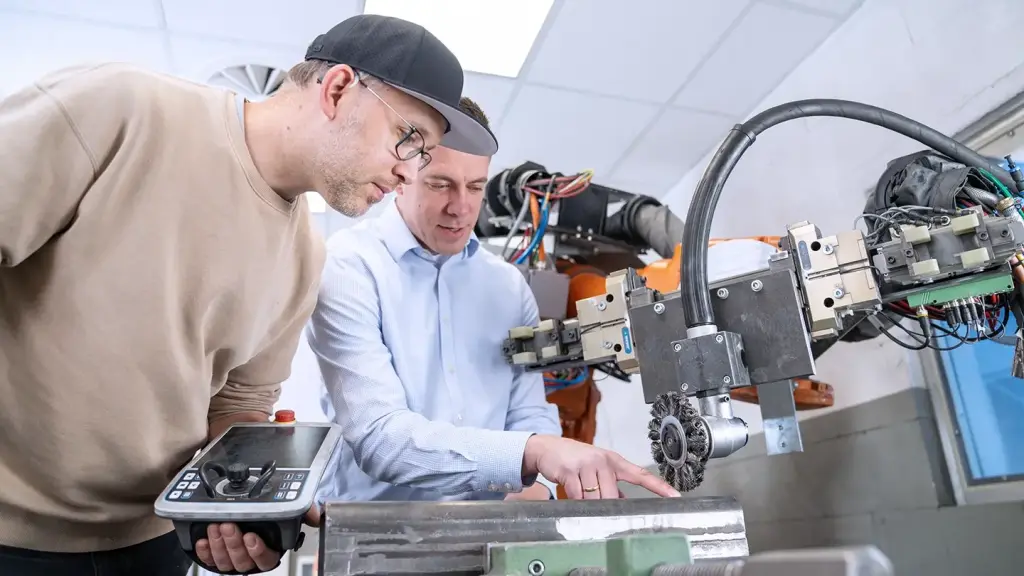
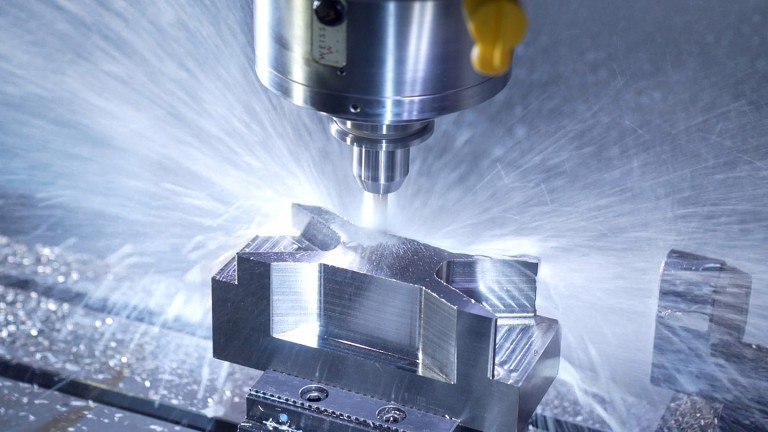
Process responsibility – how a hybrid approach to consultations brings together expertise in machining applications and work on surfaces and unlocks potential to improve productivity, process reliability and the Total Cost of Ownership.
The metalworking industry is under continuous pressure to maximize efficiency. Rising energy and material costs, the ongoing skills shortage and the need to machine challenging materials such as titanium, nickel-based alloys and high-strength stainless steels pose major challenges for manufacturing companies. Many businesses are also facing a problem that has previously been underestimated: the fact that measures to optimize specific manufacturing steps or areas of production no longer deliver the necessary results.
“Many companies don’t look beyond the CNC spindle,” says Jörg Hesse, CSO of PFERD TOOLS. “For users, however, that’s often where the crucial financial part of the process begins. That’s why we focus on process responsibility – stretching from the very first chip all the way to the final surface quality required in each case. A fast milling process only truly
adds value if the component achieves the desired result without the need for time-consuming reworking.”
With its hybrid approach to consultations, PFERD TOOLS looks holistically at all aspects of the production chain. By incorporating the machining expertise of SILMAX and TUSA, the company has expanded its portfolio beyond traditional work on surfaces, and now combines stationary machining with manual and automated machining processes.
Designing the process with the finishing stage in mind
A cornerstone of the company’s approach is to closely coordinate the CNC machining stage with the subsequent finishing stage. Tool geometries, coatings, and machining parameters are not considered in isolation; instead, they are assessed in terms of their impact on the next steps of the process.
“It’s not just about how efficiently a material is machined, but about what machining outcome is passed on to the next stage,” explains Dr Mark Wolf, developer at PFERD TOOLS. “Coordinating the machining stage with the work on surfaces is essential for delivering reproducible results across the entire process chain.” This approach reduces time-consuming corrections, reworking and waste, while also speeding up overall throughput times and making the process more reliable.
Recommended for demanding applications
This approach comes into its own for industries that place high demands on surface quality and component integrity. In the tool and mould-making sector, the amount of time-consuming polishing and reworking required can be significantly reduced. In the aviation industry, a coordinated process chain helps to minimize the risk of waste when working on costly materials such as titanium or nickel-based alloys. This type of holistic analysis also enables a more realistic assessment of the actual production costs, as the focus is not on individual tool prices, but the total process costs including throughput times, any reworking required, and process stability.
Standardization in response to the skills shortage
According to PFERD TOOLS, another advantage is the fact that the processes can be reproduced more easily. By setting defined tool parameters and closely interlinking the machining steps, there is less variation in the surface quality and the company is less dependent on the experience and knowledge of specific employees.
“Stable, standardized processes are increasingly becoming a competitive factor,” says Hesse. “Manufacturing systems must become more robust and less dependent on specific employees, especially in light of the current skills shortage.”
Première at AMB 2026
PFERD TOOLS will be presenting this integrated approach for the first time at AMB 2026 in Stuttgart. The company will be showcasing a complete range of high-end solid carbide tools as well as automated solutions designed to further harmonize how the machine, tool and workpiece interact with one another. By bringing together expertise in machining applications and work on surfaces in a single, hybrid approach, the company has adopted a new understanding of what efficient production looks like – economic efficiency is not determined by how individual process steps are optimized, but by how all the links in the process chain interact with one another.