Differences, advantages, and recommended uses
Selection of the optimal grinding method plays an important role in the processing of workpieces. Wet and dry grinding are two basic processes, each of which has its specific strengths.
What are the main differences between wet and dry grinding?
If possible, wet grinding should be used instead of dry grinding since it reduces tool wear, the risk of thermal damage to tools and workpieces, and dust accumulation.
A bonding system attuned to wet grinding is superior to dry grinding with regard to productivity and service life.
Cooling
- Wet grinding: With wet grinding, a coolant such as emulsion or oil is used, which effectively dissipates the heat generated. This protects the workpiece and the tool against thermal damage and increases the service life of the grinding tool.
- Dry grinding: Dry grinding is done without coolant and is specially designed for applications where the use of fluids is not possible or required.
Process temperature
- Wet grinding: Significantly lower temperatures during grinding due to active cooling.
- Dry grinding: Higher process temperatures that must be checked using adapted tool connections in order to prevent material damage.
What are the advantages of wet grinding?
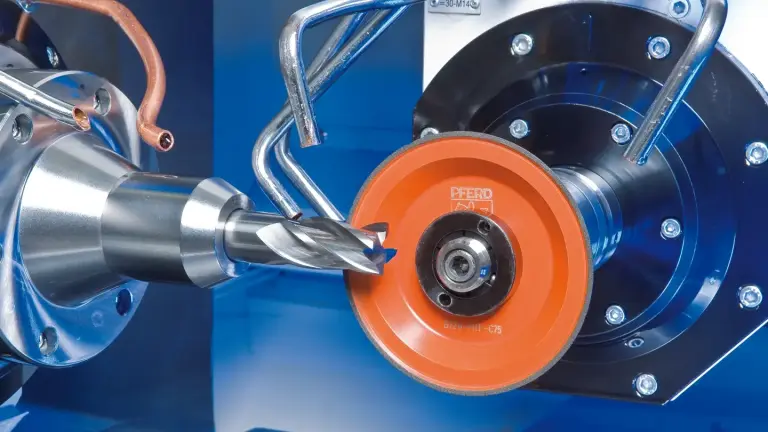
With wet grinding, a coolant (e.g., emulsion or oil) is used, which supports the grinding process and helps effectively dissipate the heat generated. This method is used especially for applications that require minimal thermal loads.
- Optimized process reliability: Cooling reduces thermal loads, which minimizes the risk of workpiece deformation, cracks or surface damage.
- Longer tool service life: Less wear thanks to reduced friction and lower temperatures.
- Outstanding surface quality: The grinding pattern is more even and is not subject to thermal influences such as burn marks.
What are the advantages of dry grinding?
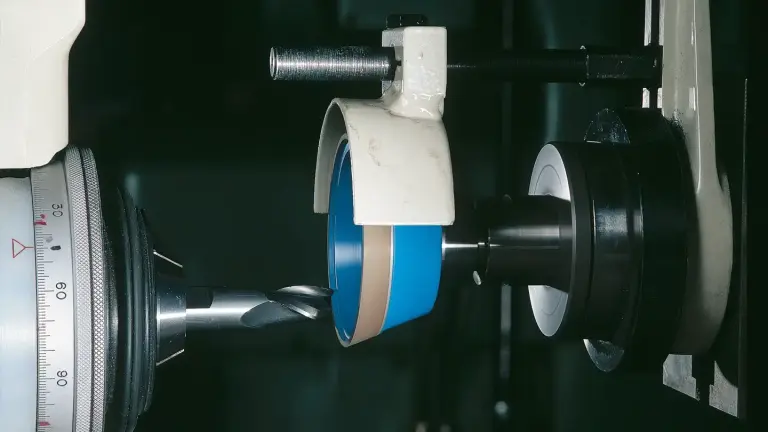
Dry grinding is done without coolant. Here, the heat dissipation is handled by the workpiece and the abrasive bond. This process is especially well-suited for applications where coolant is not practical.
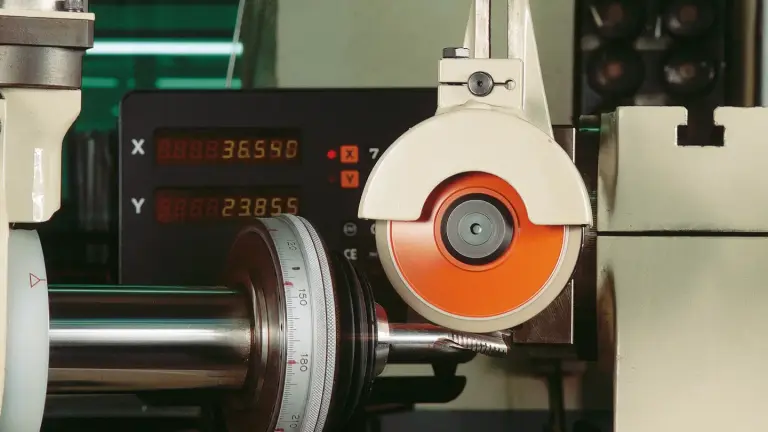
Example of an application: On tool grinding machines, artificial resin-bonded diamond and CBN grinding tools are used dry since there are no corresponding enclosures on the machine or a constant visual inspection of the grinding process is desired.
The right process for your application
PFERD TOOLS offers you an extensive assortment of diamond and CBN tools for wet and dry grinding. Our technical customer support agents will be happy to help you find the optimal solution for your grinding task.
Contact us – for the greatest efficiency and quality in processing.
Contact us